ABOUT THE ART
How the Linocuts are Made
Carving the Linoblock
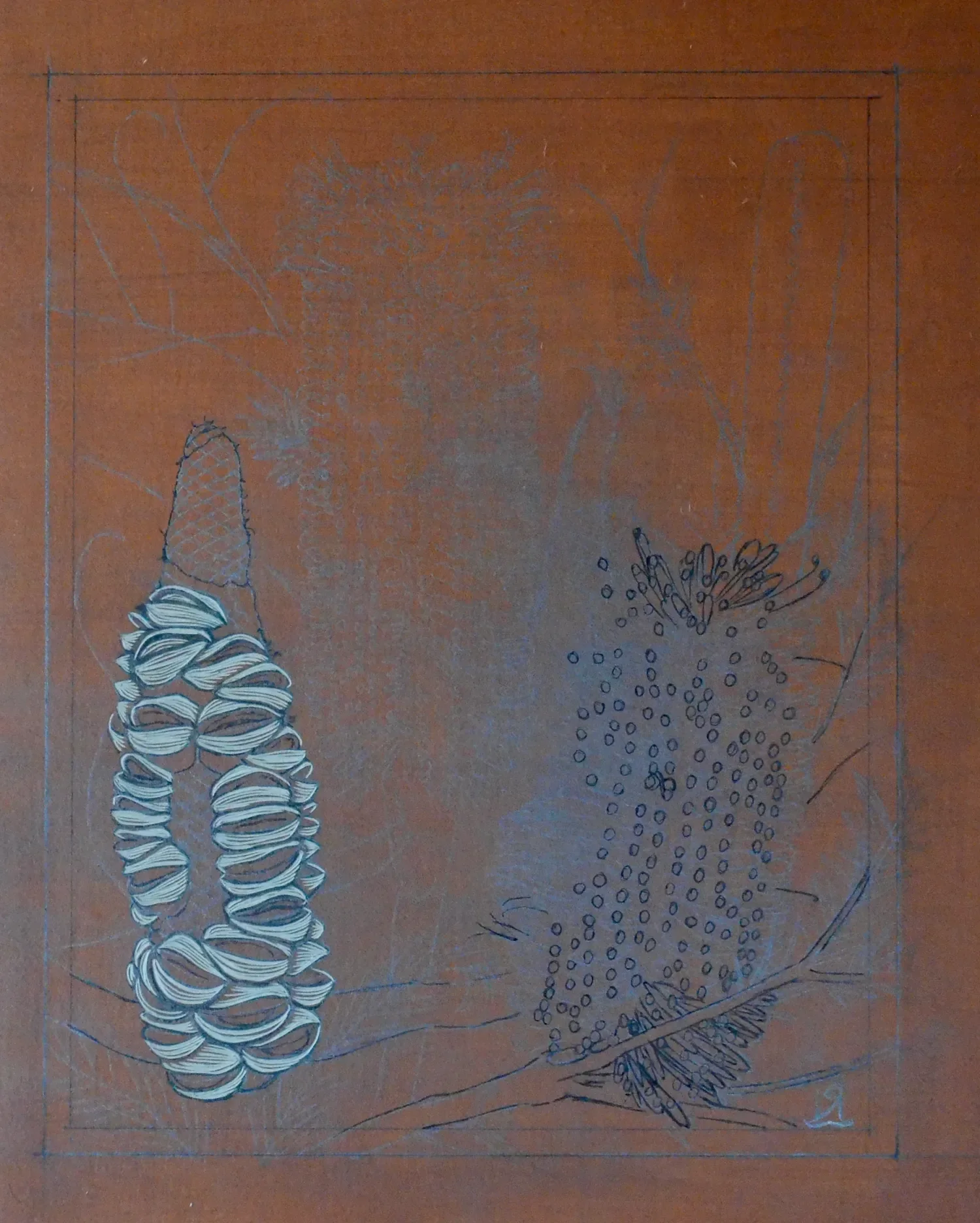
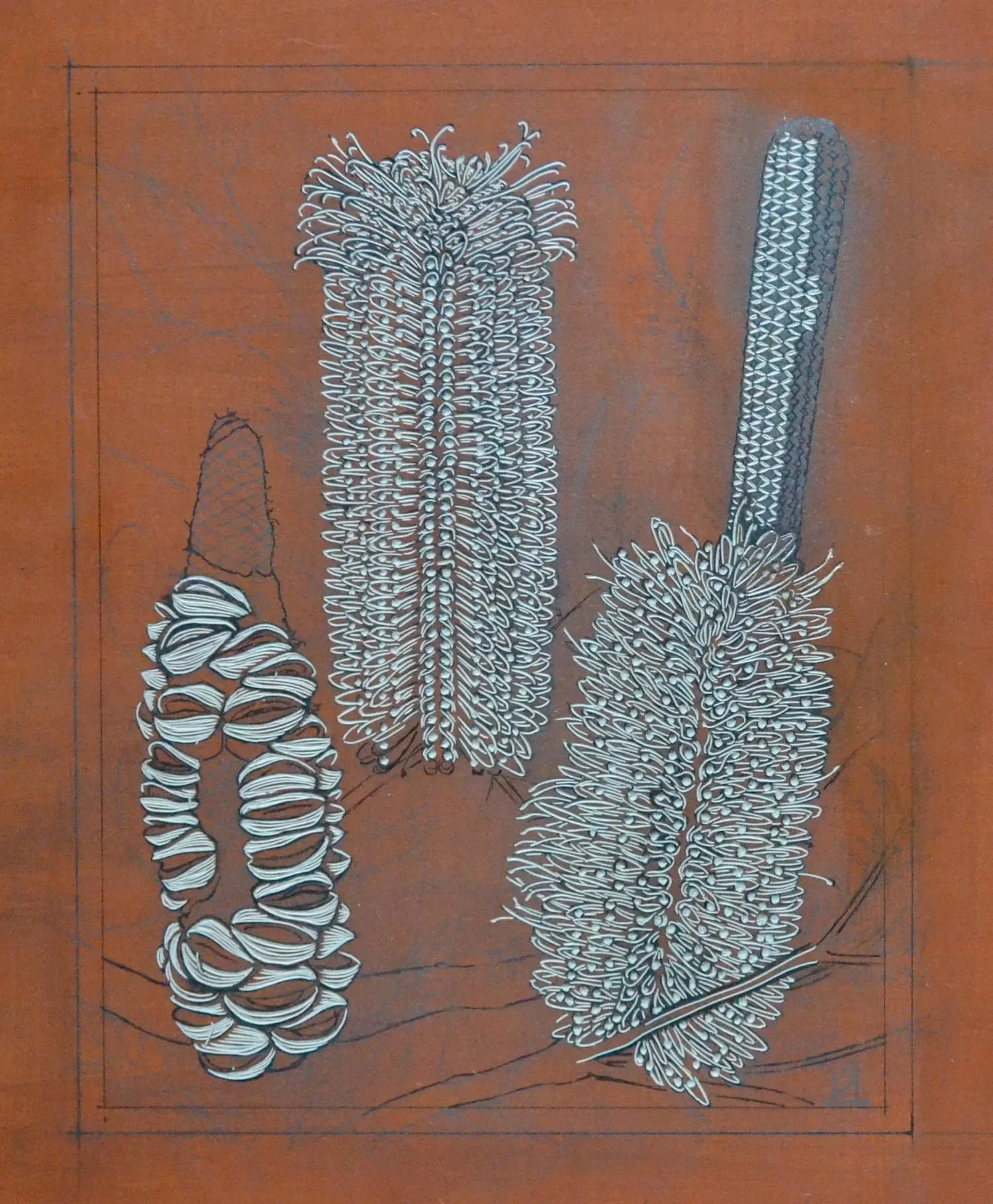
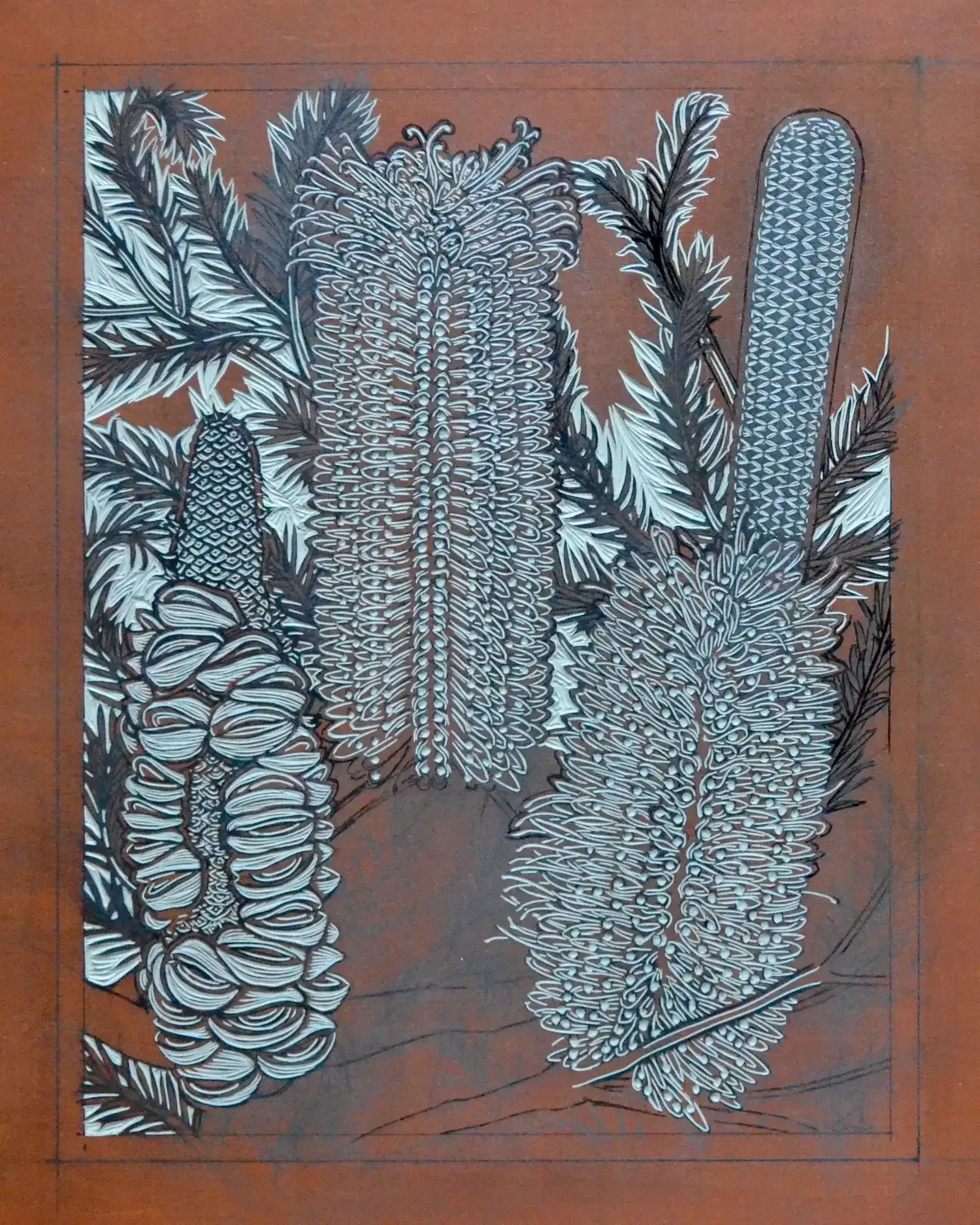
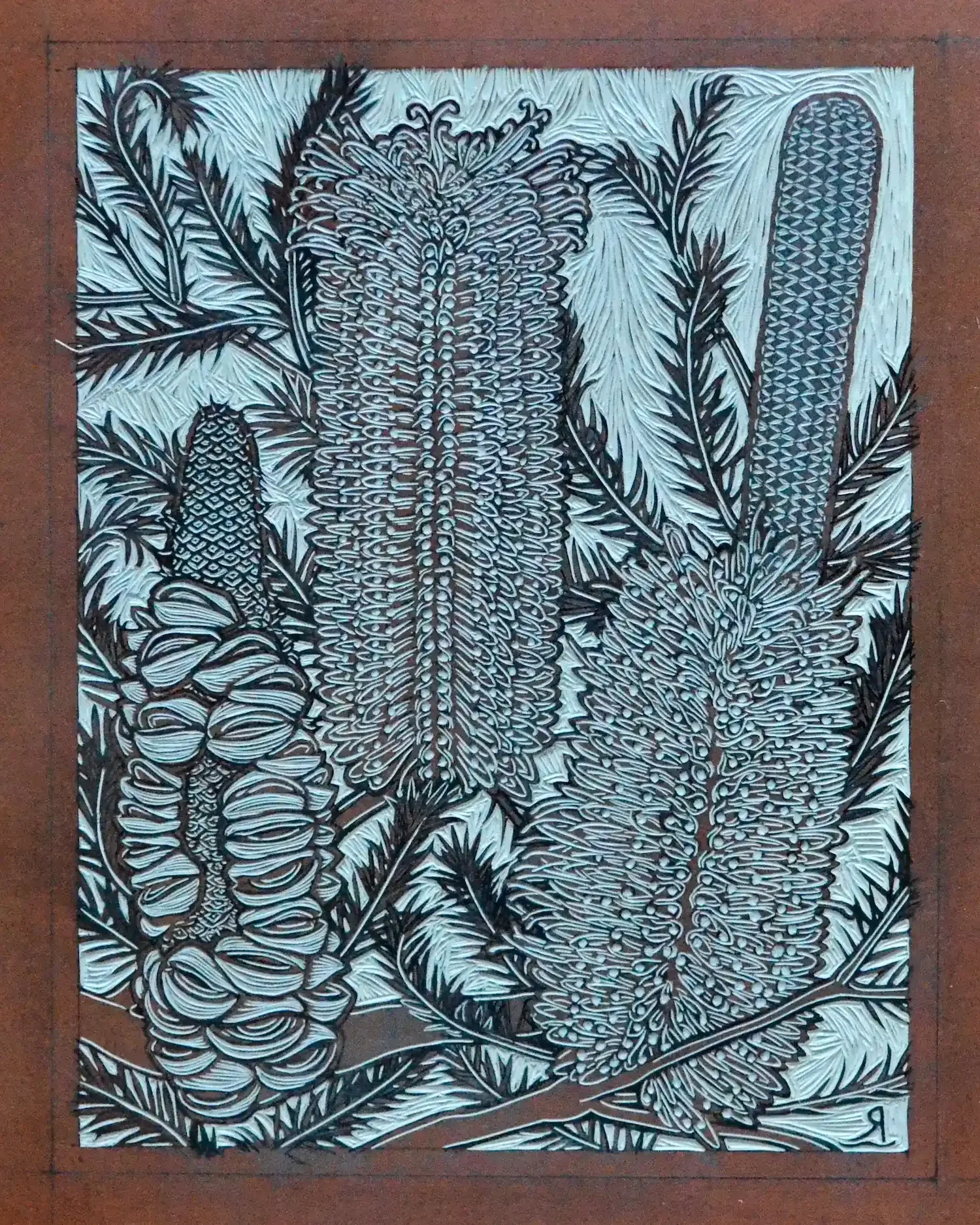
My preparatory drawings and basic composition are transferred onto the linoblock surface in pencil.
Linocut is a relief printmaking technique. My tools are mostly U and V shaped gouges used to hand carve a design into the flat surface of the block, leaving the raised areas to pick up the ink.
The Linoblock for Banksia Ericifolia in Stages of Being Carved.
Handmade Japanese Washi Papers
The papers I use for the linocuts are called washi and are traditionally used for block printmaking in Japan. Washi is unusually strong but can be thin and fine so it’s possible to judge how much ink is being taken up from the linoblock while hand-printing, without constantly lifting up the paper to check the printed side.
Washi is made from the Kozo plant, Mulberry and other different plant fibres. There are papers that have inclusions of bark, silk, and other natural elements. I carefuly choose the kind and colour of the washi, to complement each linocut print.
Ink roller, block printing ink and barens for rubbing the back of the paper.
Different kinds of Japanese washi paper used for printmaking
Printing the Linoblock for ‘Yellow-Tailed Black Cockatoos & Banksia’
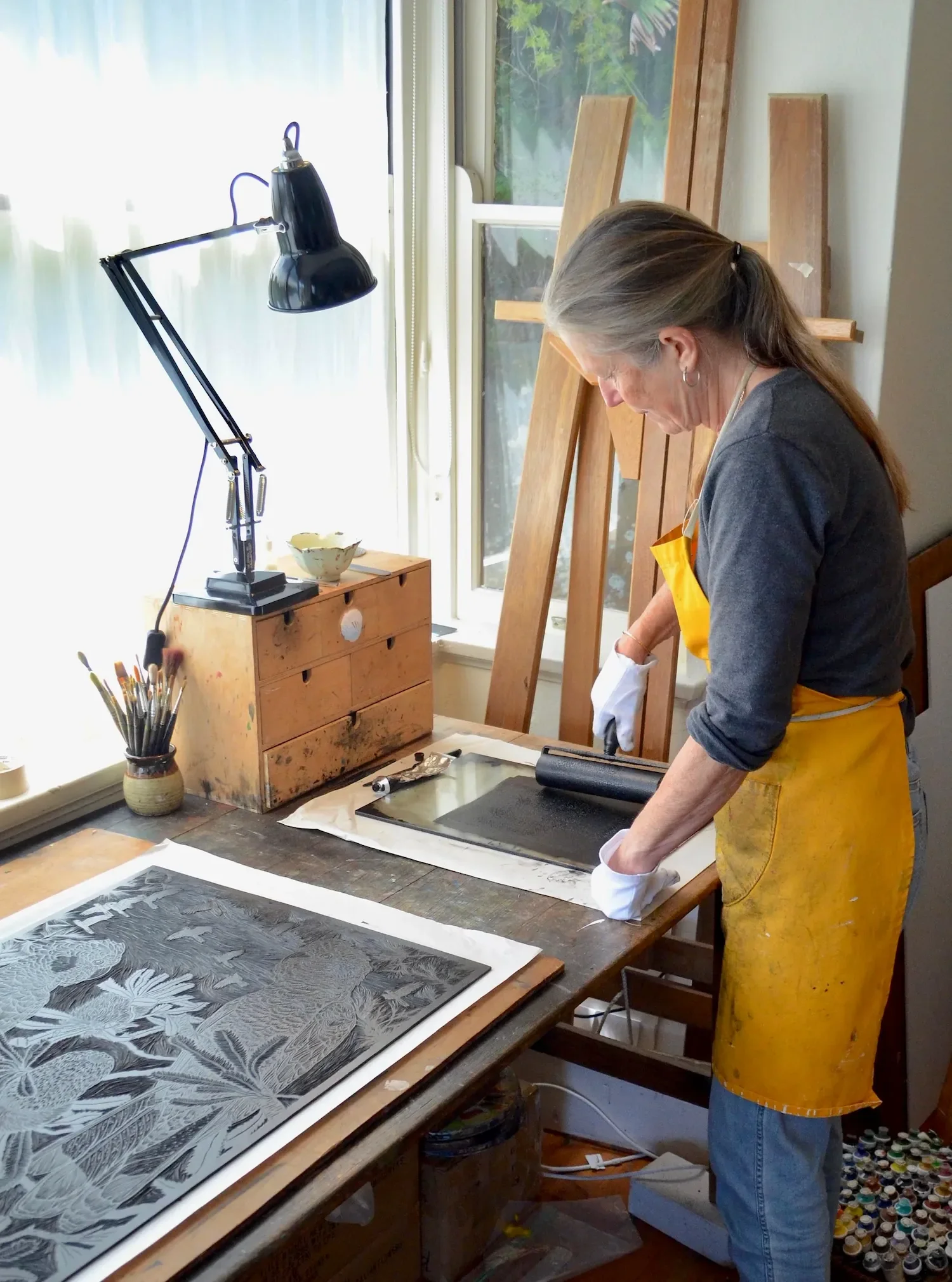
Rolling ink out onto a piece of thick glass
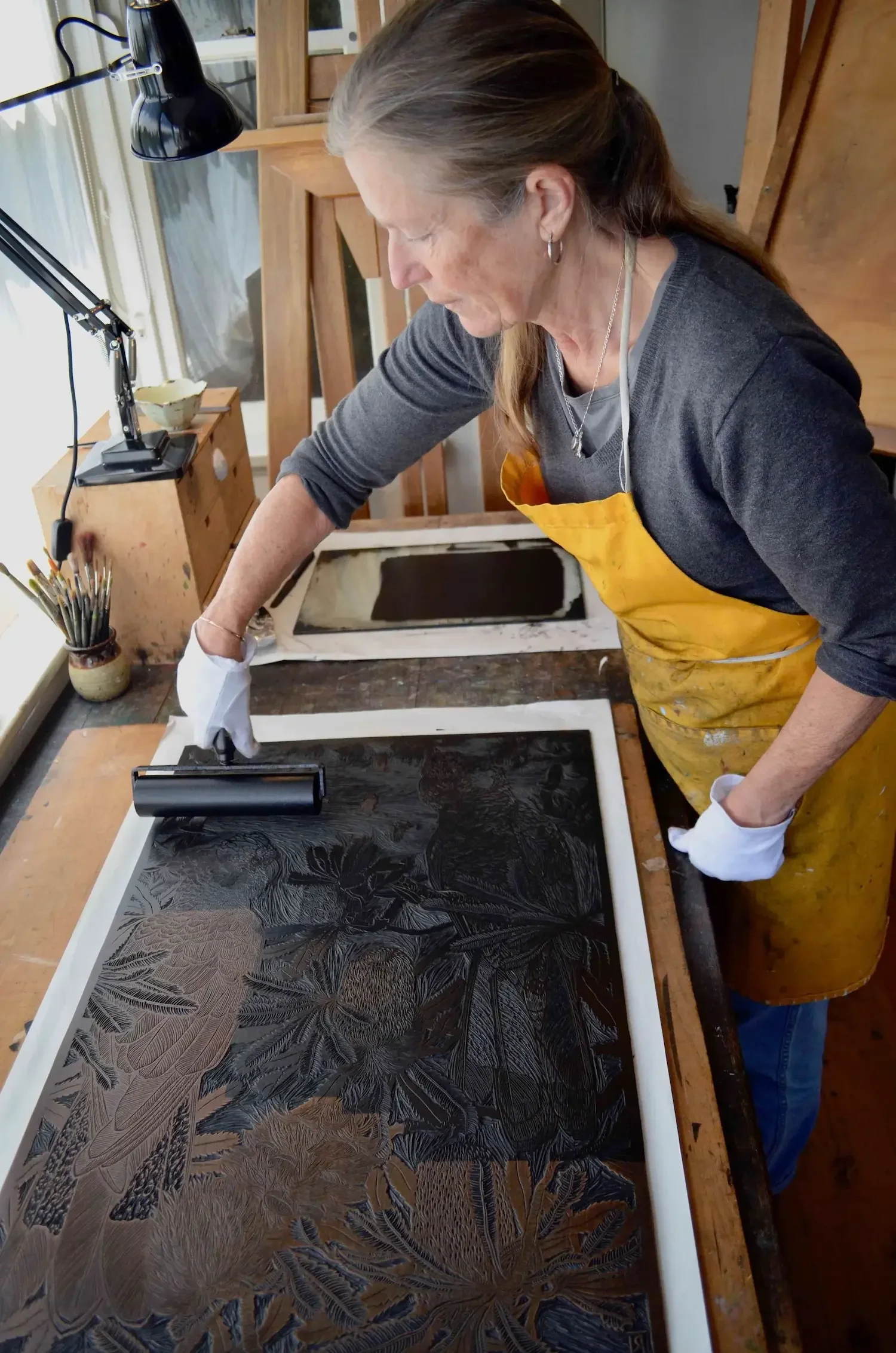
Applying the ink to the linoblock
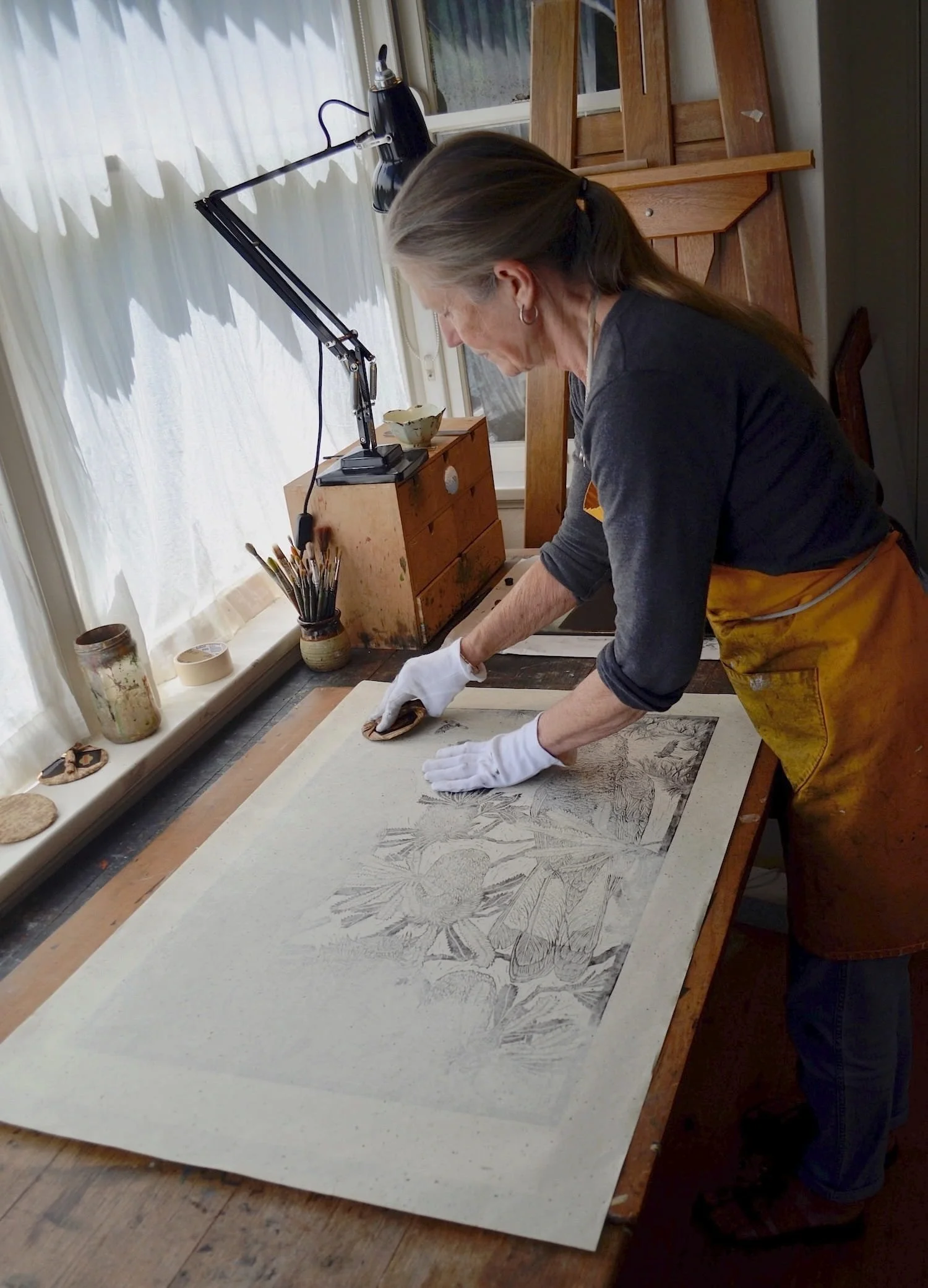
Rubbing the back of the paper on top of the inked block with a baren
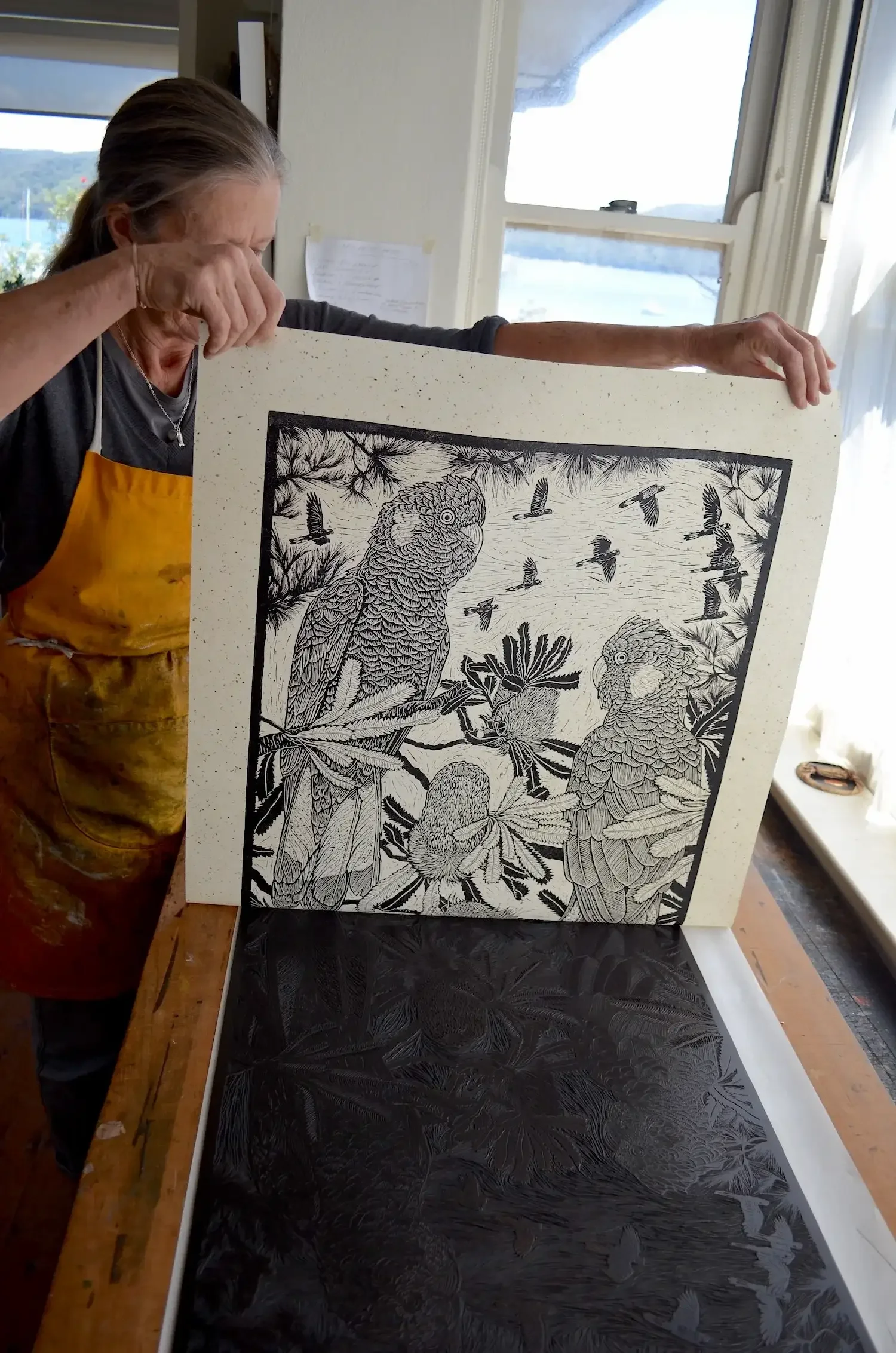
Pulling up the finished print from the linoblock
Hand-Painting the Linocut Print
I use an oil based ink for printing the linocuts and it takes a few days for the print to dry after printing before it can be hand-painted.
I have an Artist’s Proof and a colour chart for each linocut to refer to for the colour mixing and the finished look. I aim to have each painted linocut in an edition looking the same as the Artist’s Proof, there will always be slight variations which make each linocut print unique. Hand painting can be a lengthy and meticulous process, some images take many days to paint.
The example of hand-painting below is the linocut Banksias & Dryandra.
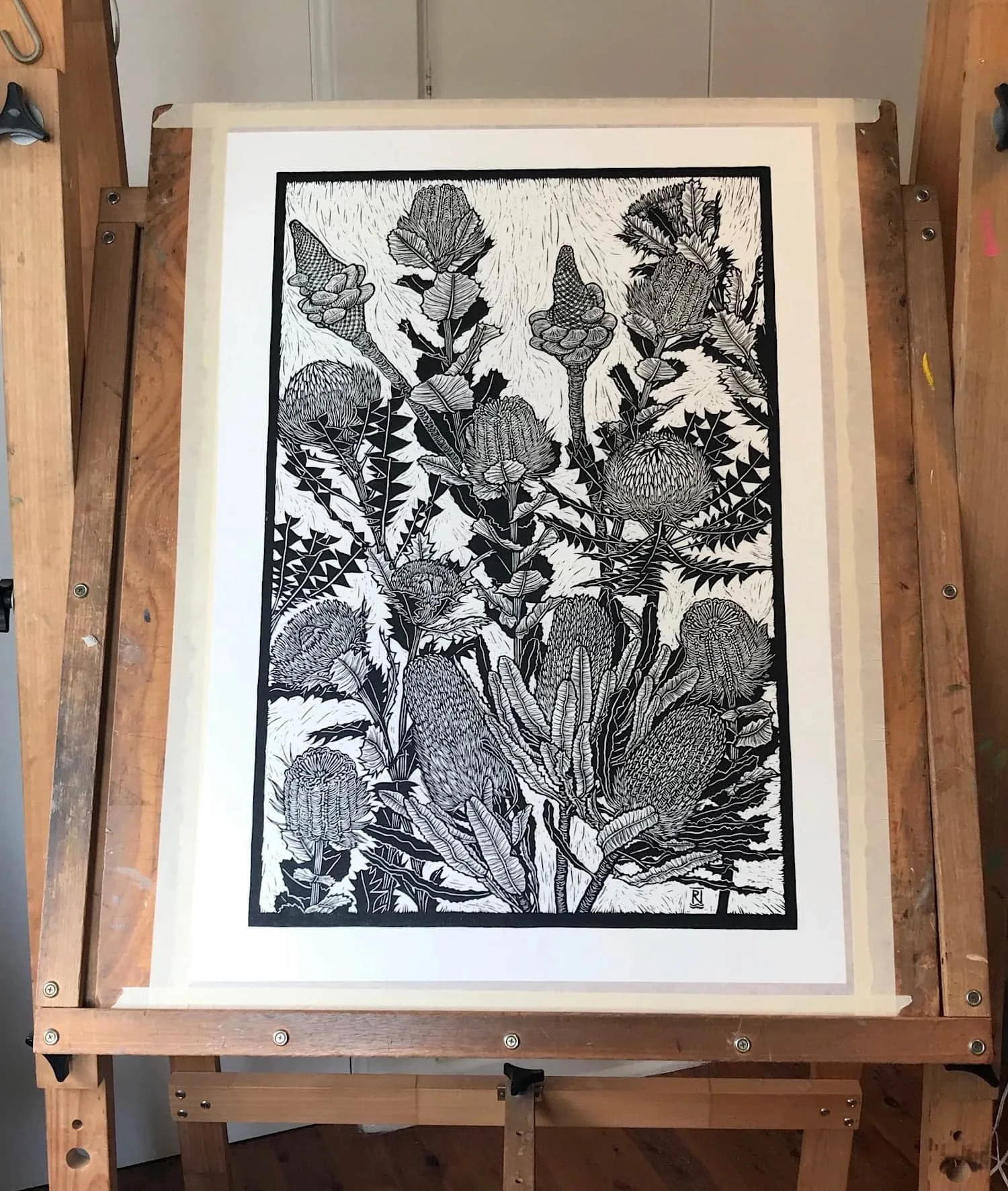
The printed linocut ready for painting
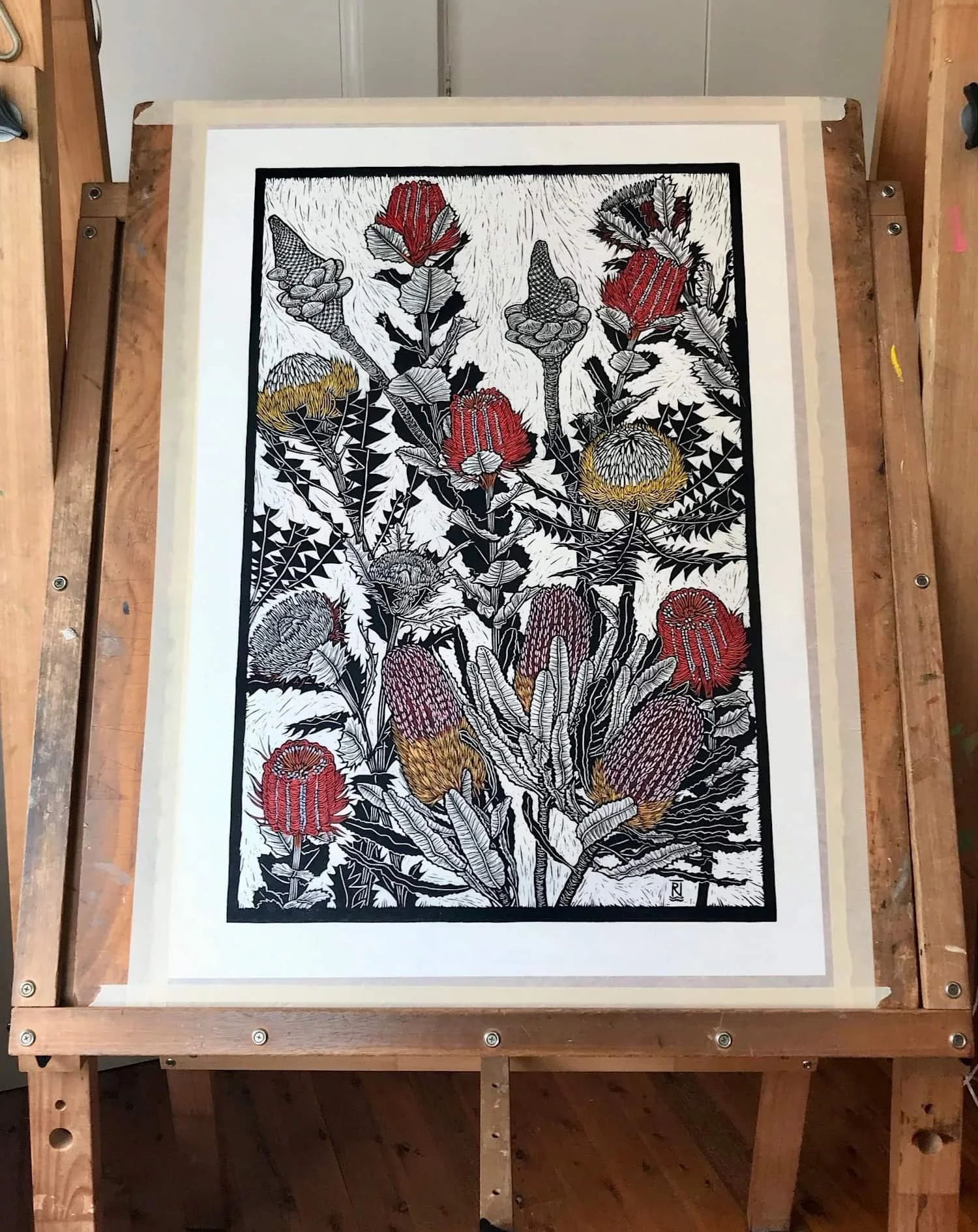
Starting to paint the linocut
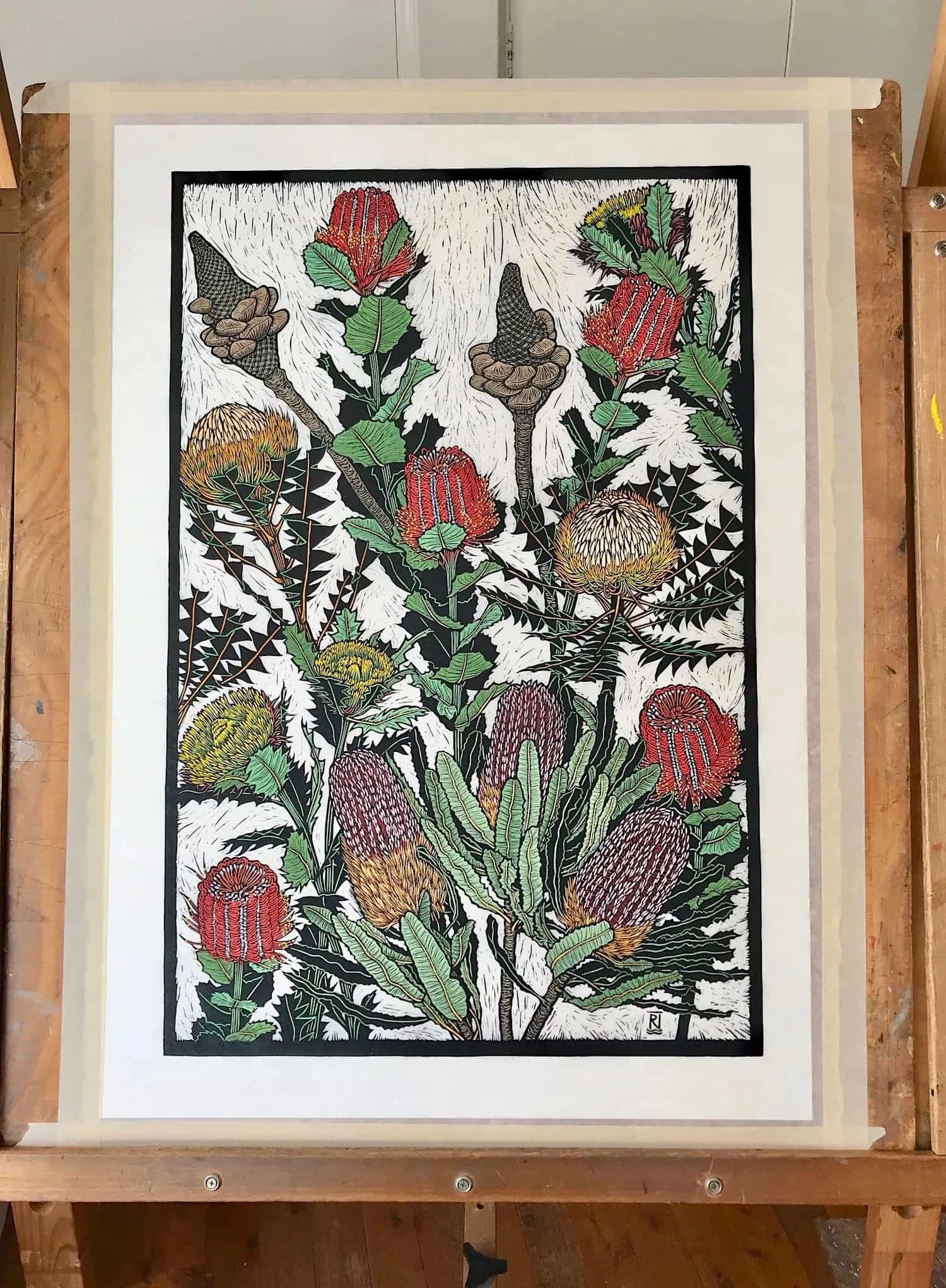
The completed hand-painted linocut
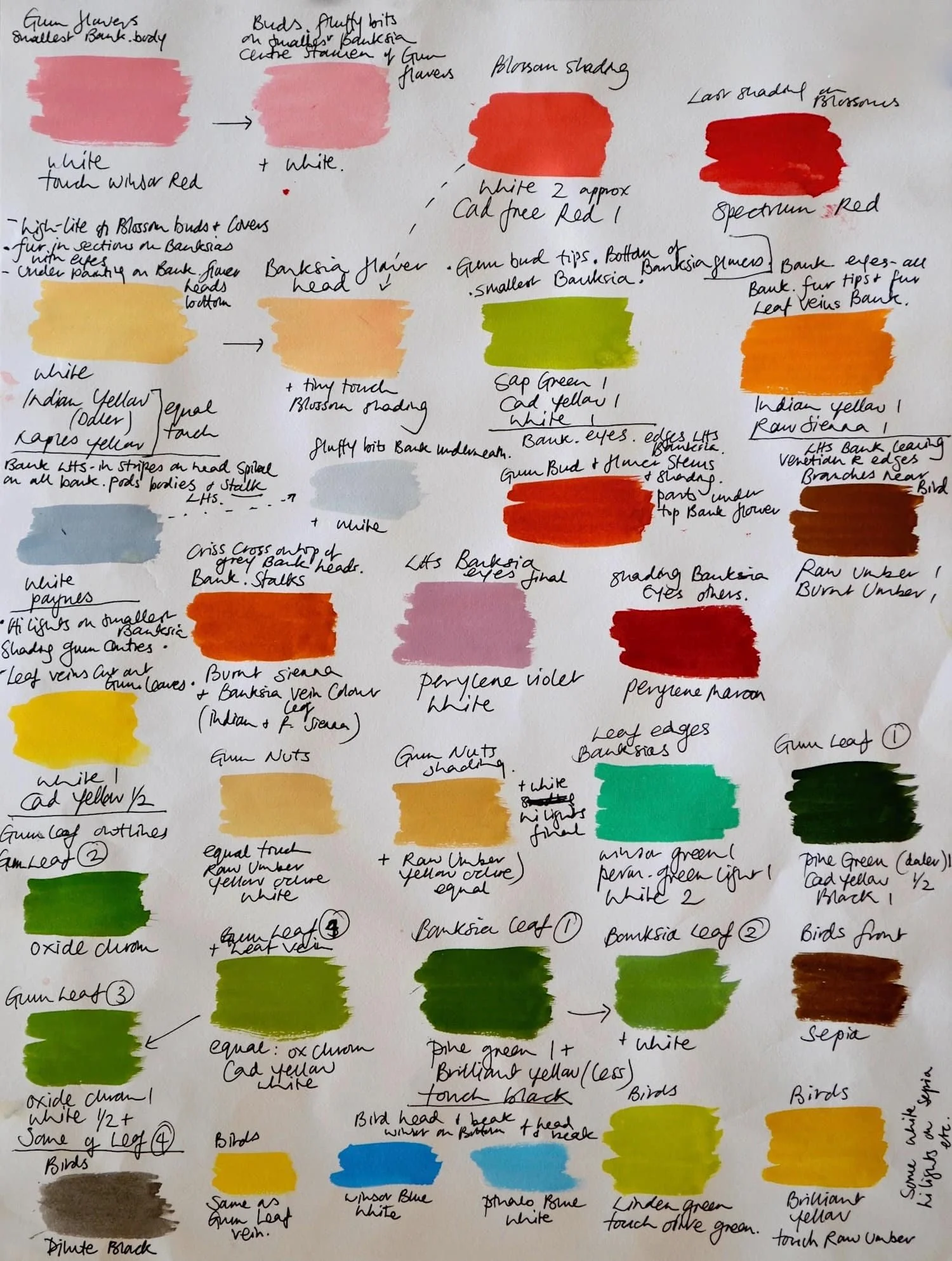
An example of a colour mixing chart
How Reduction Linocuts are Made
Some of my linocuts are made using a technique called reduction printmaking, which uses a single carved block throughout the entire process. All the colours are printed, not hand-painted.
I start with the number of pieces of paper that I will finish the edition with. Some of them will not make it into the edition because of colour mismatch, the registration being off and other problems.
I progressively carve and print from one block of linoleum. After printing the lightest colour, I carve away more of the same block to protect that layer from being overprinted by the subsequent colour and then print the next colour directly on top of the first one.
This cycle repeats from lightest to darkest colour until the image is finished. All that remains of the linoblock is the state that produced the last printed colour.
‘Weightless’ a three-colour reduction linocut.
How the Engravings are Made
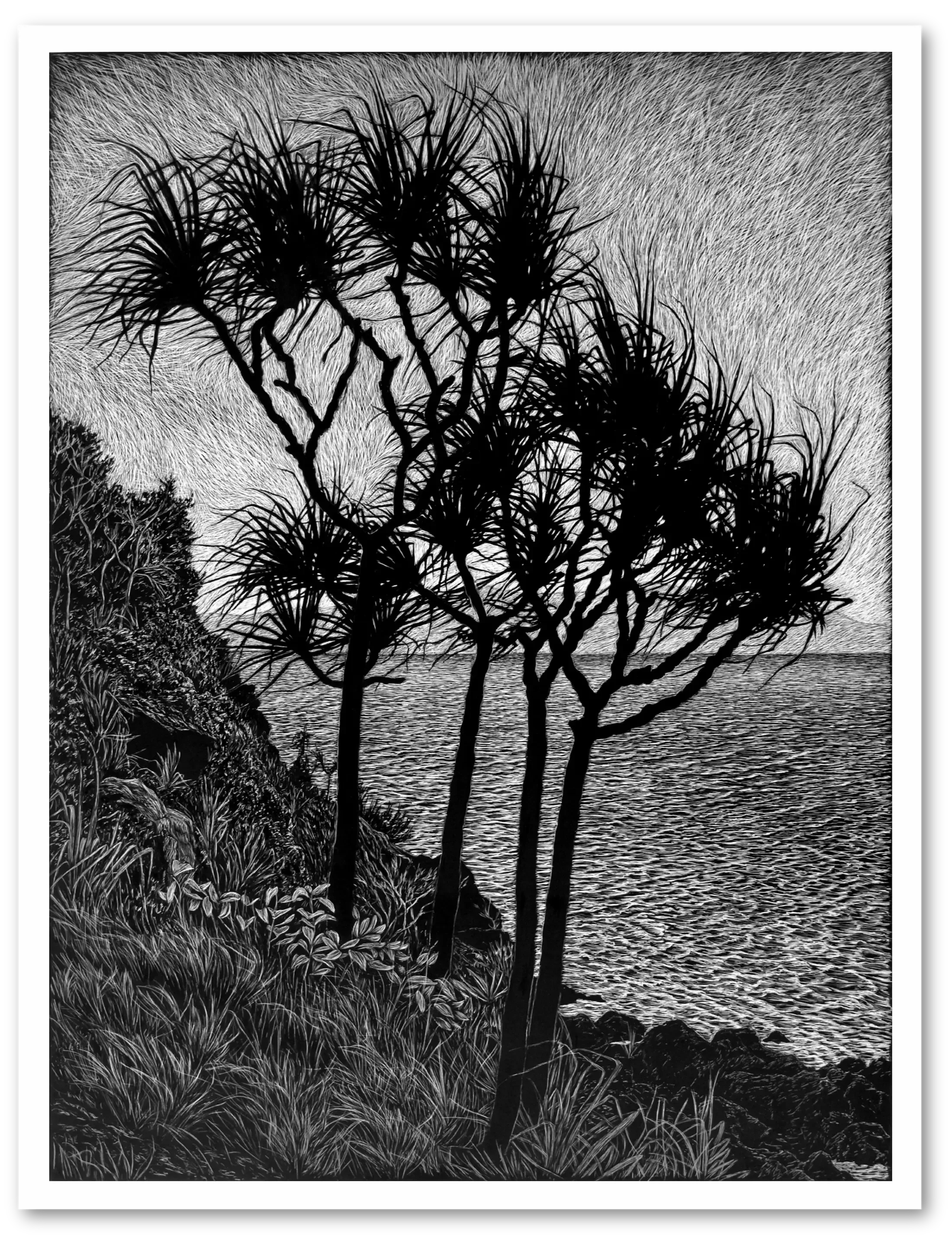
'Headland with Pandanus', limited edition engraving
The Engraving Process & Printing
I use a Clayboard panel which is a sheet of masonite covered on one side with a kaolin clay smooth surface. Ink is layered onto the board, I then scratch through (sgraffito) the ink layer with an engraving tool to reveal the white kaolin underneath.
I work with an experienced printer to reproduce the unique qualities of the engraving. It is not possible to make a traditional press print from a clayboard panel, so the original engraved panel is scanned at high-resolution to capture all the fine details.
The engravings are digitally printed using museum-grade, lightfast pigment inks on a heavy archival 100% cotton rag paper.
This is the same high-resolution archival printing process used by many respected fine art photographers and contemporary printmakers worldwide and is recognised in the art world as a legitimate art-making process.
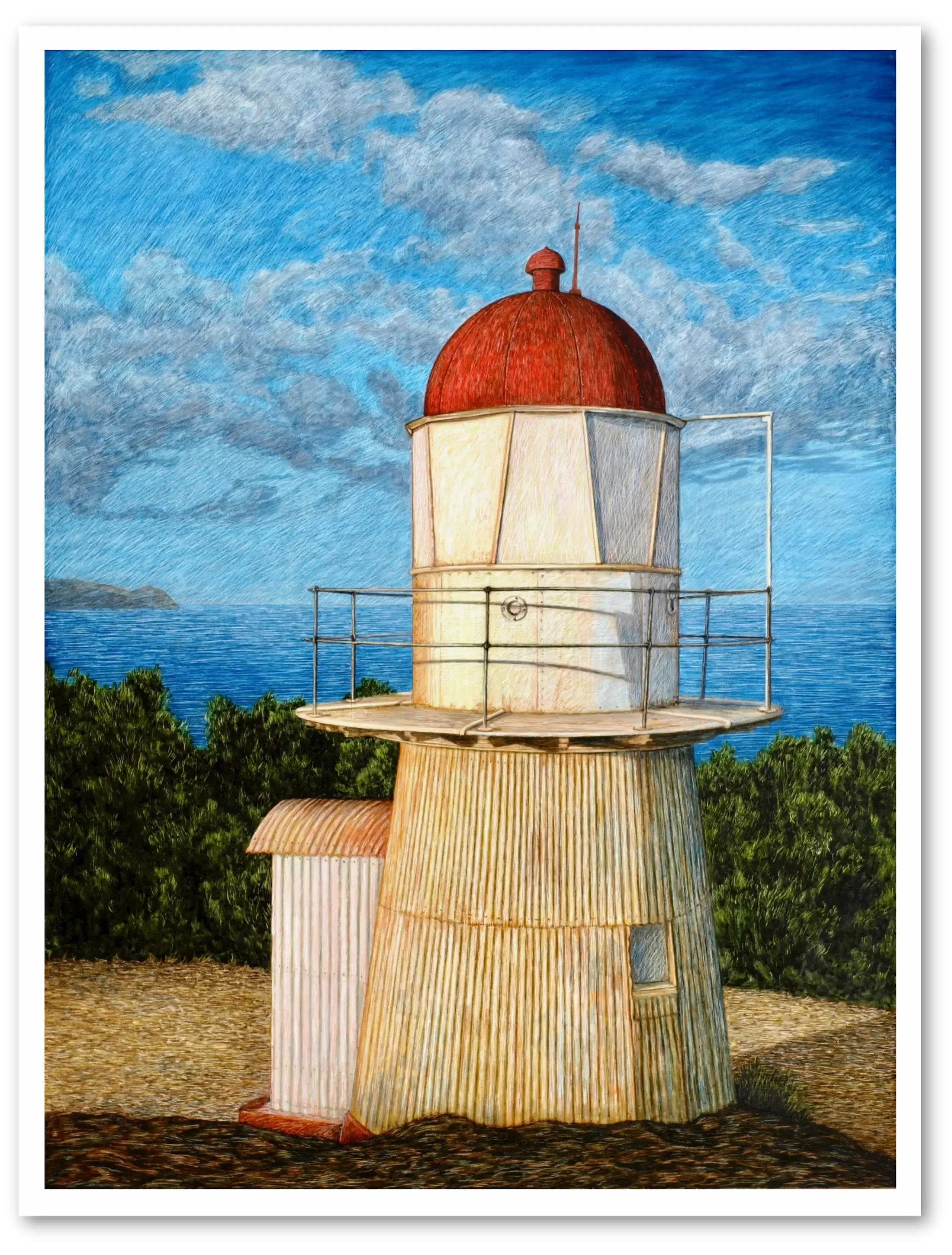
‘Cooktown Lighthouse’ limited edition engraving
Rachel working on the clayboard panel for the engraving ‘Agave Clareville Beach III’
About the Editions
An edition is the number of prints that will be printed from one linoblock or engraving plate. It’s written on the print as the number of the print over the size of the edition.
Because of the effort and expense of the materials that go into producing each linocut and engraving, it’s not feasible to produce the entire edition and have it sitting ready to be sold . Consequently I make each print to order.
I keep a backed-up electronic record of the number of prints that have been sold in each edition and I also keep a hard copy.
Most of my linocuts and engravings are editions of 50 but reduction editions are usually much smaller.
Linoleum is a natural product made from linseed oil and rubber with a hessian backing and is quite fragile - easily dented and snapped. Because my linocuts are hand-printed, the linoblocks last in a much better condition through an edition than if the prints are made using a mechanical printing press.